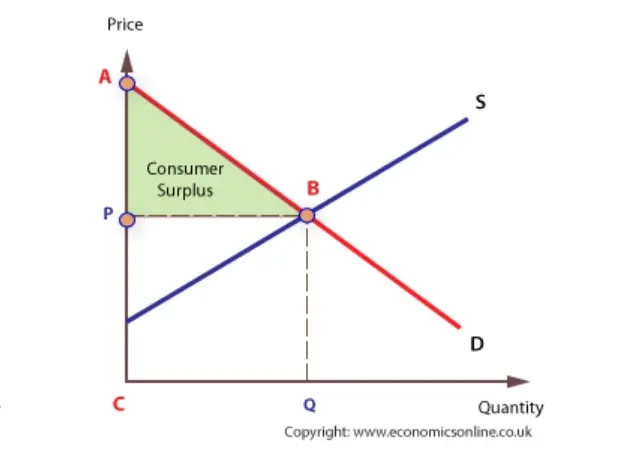
A) the producer surplus gained by being a monopoly B) the consumer surplus gained by being a monopoly C) deadweight loss D) total economic surplus 23) In the case of rentseeking behavior in a monopoly market A) the net loss to society is greater than it would have been in the absence of rentseeking behaviorConsumer Surplus and the Demand Curve Individual consumer surplus is the net gain to an individual buyer from the purchase of a good It is equal to the difference between the buyer's willingness to pay and the price paid Total producer surplus in a market is the sum of the individual producer surpluses of all the sellers of a good Assume that i there are no externalities;

Facebook And The Cost Of Monopoly Stratechery By Ben Thompson
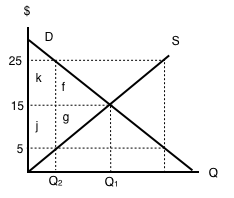
In absence of monopoly consumer surplus is area(s)
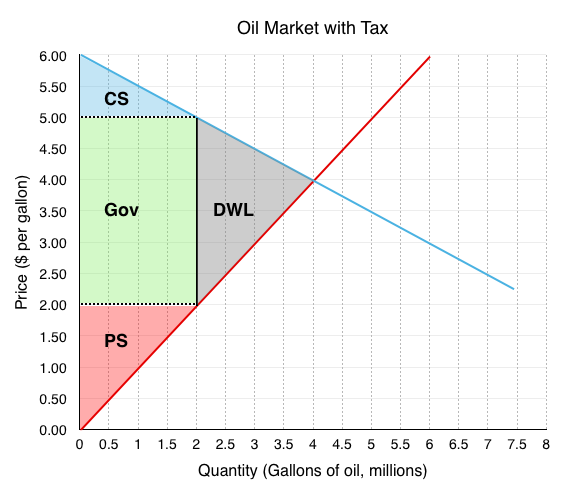
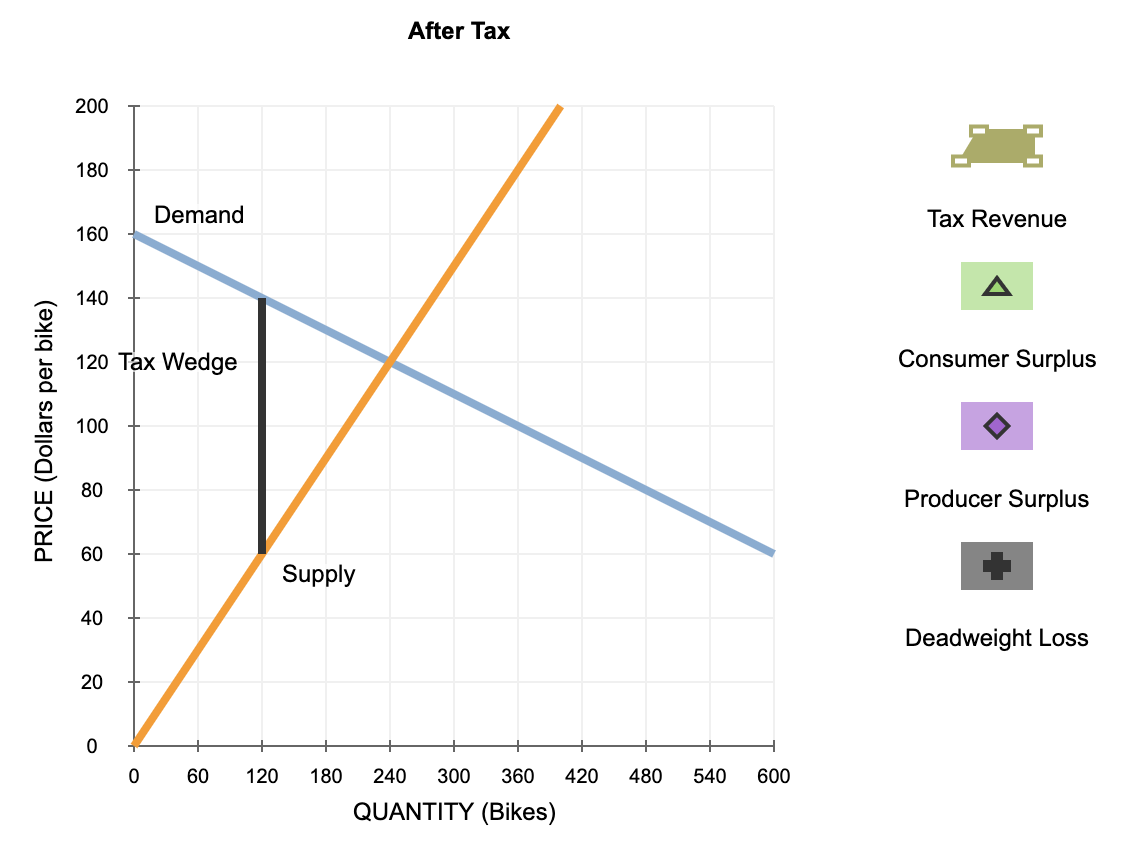
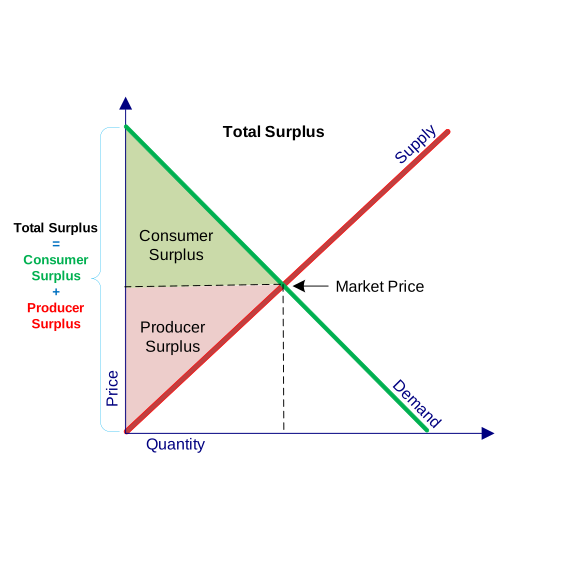
In absence of monopoly consumer surplus is area(s)-When graphing consumer surplus, the area above every extra unit of consumption, is referred to as the total consumer surplus Similarly, the area above the supply curve for every extra unit brought to the market is referred to as the total producer surplus When you add both the consumer and producer surplus, you get the total surplus, also known as total welfare or communityTaxes create a triangular area known as deadweight loss when they are placed Taxes are collected in the area between the producer surplus and the consumer surplus after taxes are imposed The deadweight loss of a tax is affected by supply and demand's elasticities
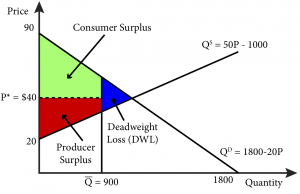


Module 10 Market Equilibrium Supply And Demand Intermediate Microeconomics
Monopoly causes a reduction in consumer surplus Monopoly causes an increase in producer surplus Monopoly causes a reduction in economic efficiency all of the aboveAnd show that the monopolist's best strategy is dumping on the world market † Use the graph to show that domestic consumers sufier from high monopoly price Hint Consumer surplus is the area below the demand curve Draw it before and after dumpingThe rectangular area is the surplus going to the monopolist The sum of these two surpluses is the total surplus generated by the monopoly So with the more efficient monopolist, even if chooses the price itself, we could have an industry in which the price is lower, the output higher and the total surplus higher than if the firm were competitive
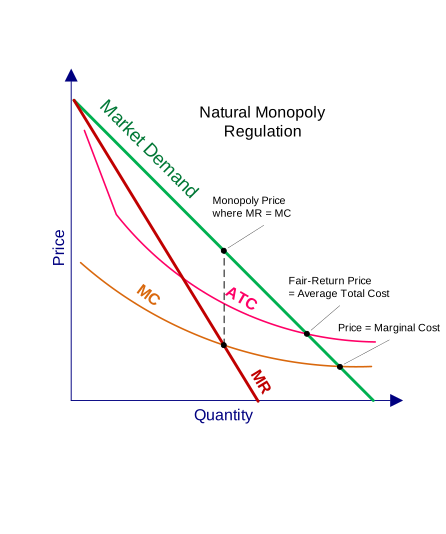
Than marginal cost, reducing their consumer surplus d the monopoly firm chooses a quantity that fails to equate price and average revenue 6 When a monopolist switches from charging a single price to practicing perfect price discrimination, it reduces a the quantity produced b the firm's profit c consumer surplus d total surplus The monopolist's MC=1005*P The total surplus of consumers is equal to (1000 0)*800*05= 3000 The total surplus of the monopoly is equal to 180*800**(0180)=000 Thus the market surplus is 3000 000 = As you can see, the total market surplus is bigger Much bigger UPDATE 02Consumer surplus is the greatest in magnitude, thus most favorable to the consumers, as it leads to the highest level of consumer welfare Monopoly is characterized by economic inefficiency, which is in the form of reduced consumer surplus and deadweight loss The exception to the above said inefficiency is the case of monopoly (usually natural monopoly) where marginal cost
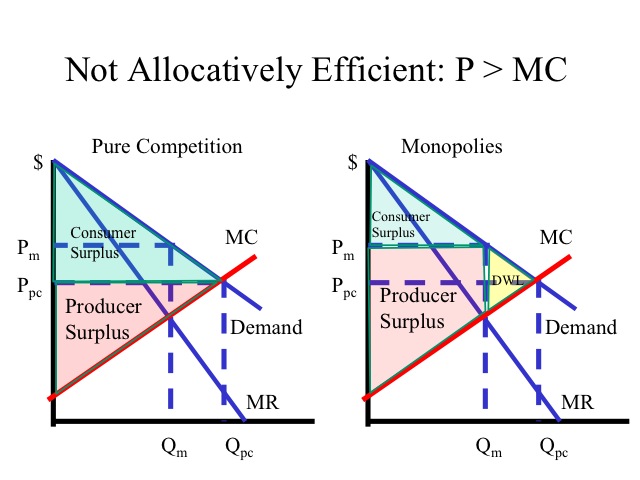
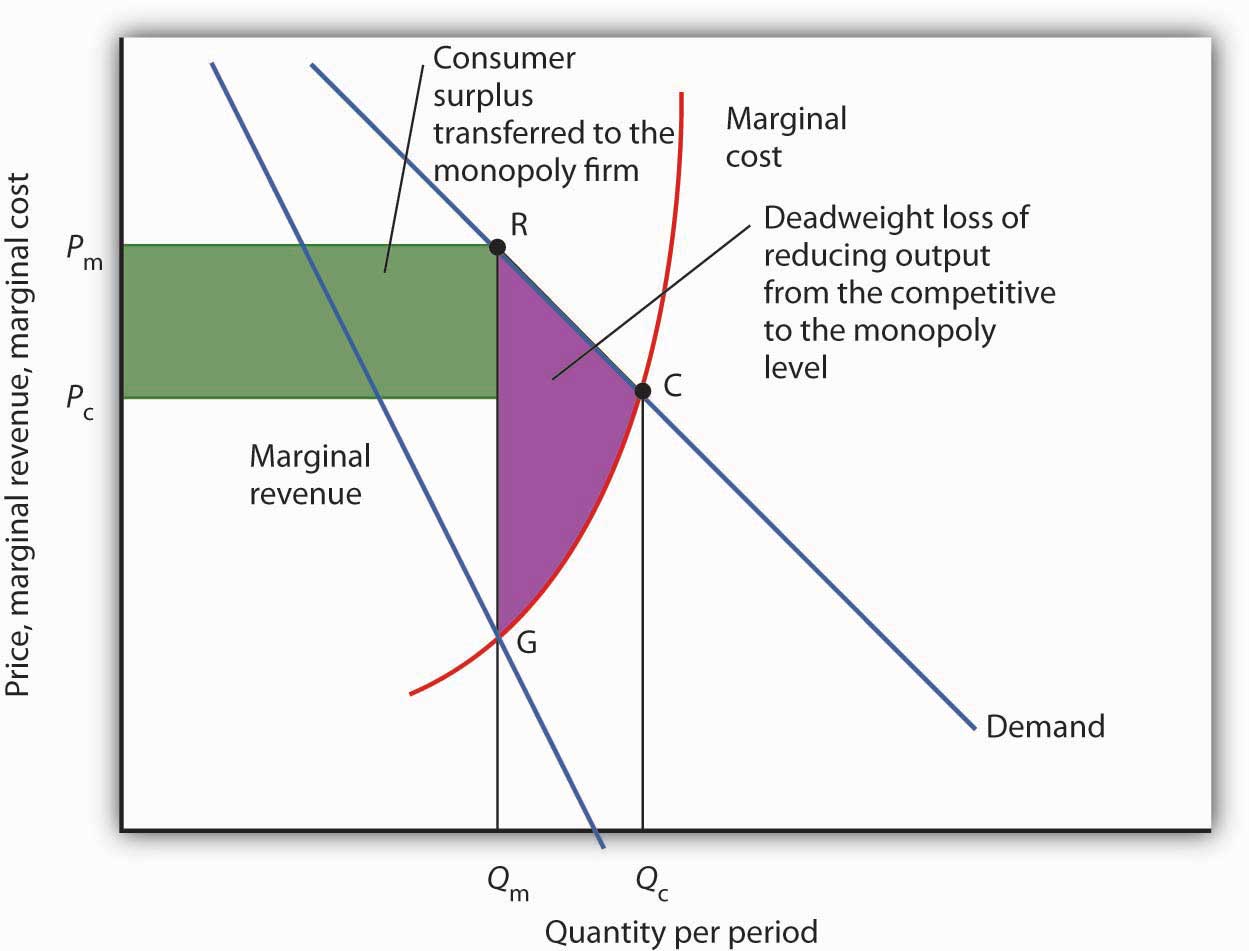
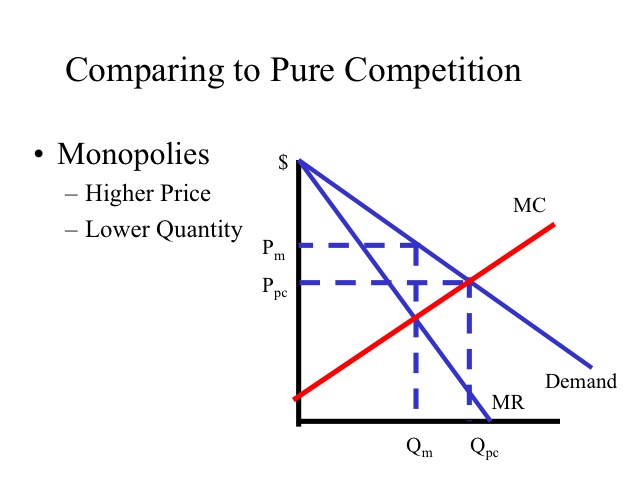
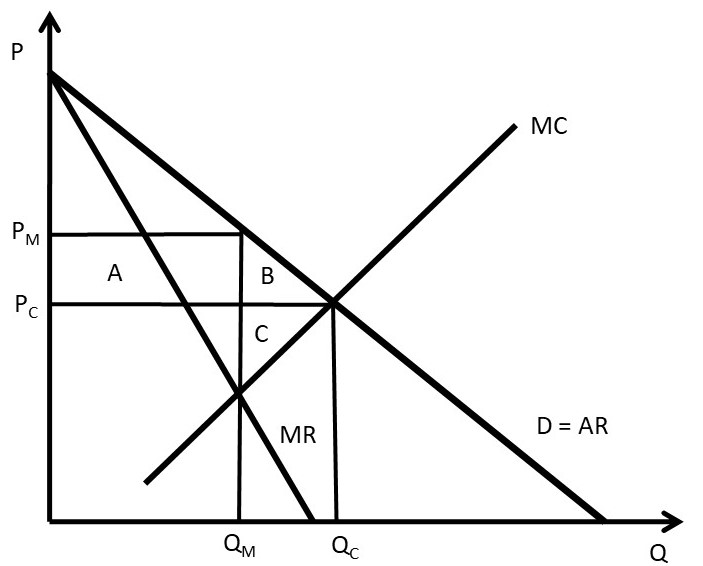
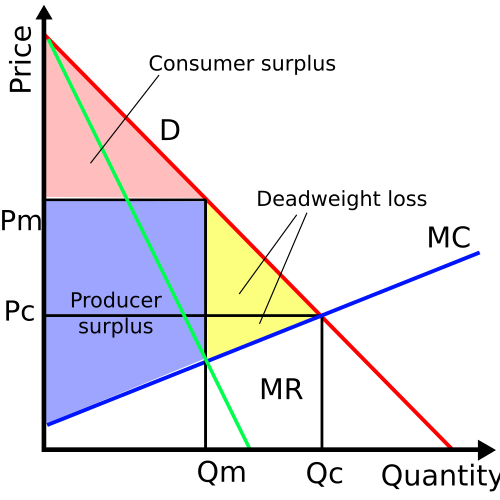
Which area shows a reduction in consumer surplus that is transferred to producers as a result of this industry being a monopoly rather than being perfectly competitive? What Is The Area Of Deadweight Loss Quizlet?With monopoly, consumer surplus would be the area below the demand curve and above P m R Part of the reduction in consumer surplus is the area under the demand curve between Q c and Q m;
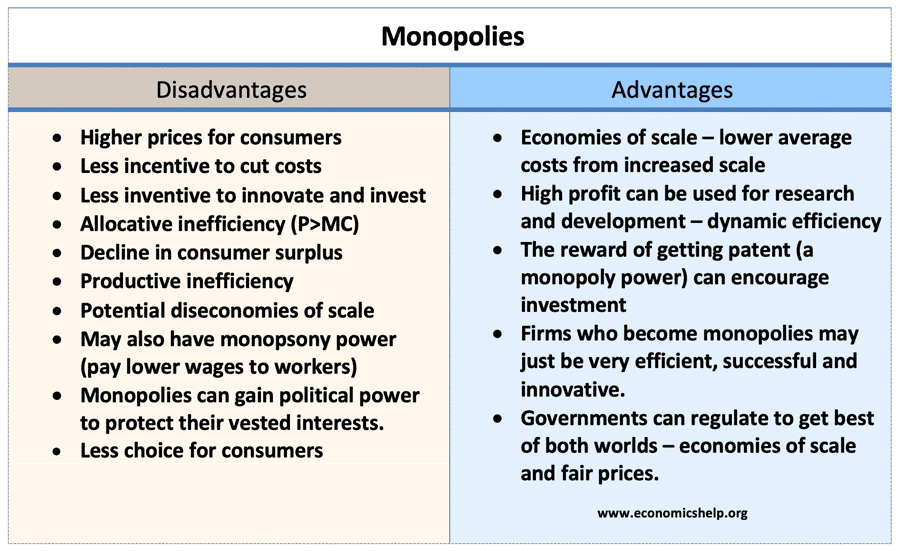
Advantages And Disadvantages Of Monopolies Economics Help

Graph 1
Consumer surplus is an economic measurement to calculate the benefit (ie, surplus) of what consumers are willing to pay for a good or service versus its market price The consumer surplus formula is based on an economic theory of marginal utility The theory explains that spending behavior varies with the preferences of individualsStrategy in the absence of market power I Firms cannot in uence price and, because products are not unique, Situation is ine cient, insofar as the sum of consumer and producer surplus is concerned Total Surplus = area Op cS I Monopoly Total Surplus =Of monopoly Harberger's (1954) famous triangle applies just as effectively in this case as in the roughly triangular area4 The absence of elaboration results Q1− Q2, are destroyed Consumer surplus is now only the area under the demand curve above P2 At this point, the overall impact of the intervention is explained most easily
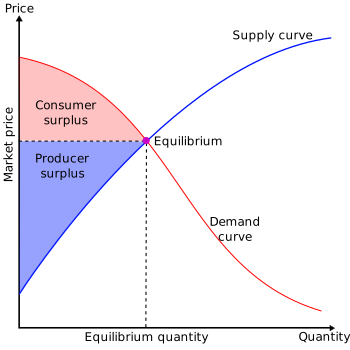
Consumer Surplus Boundless Economics

Microeconomic Frq S
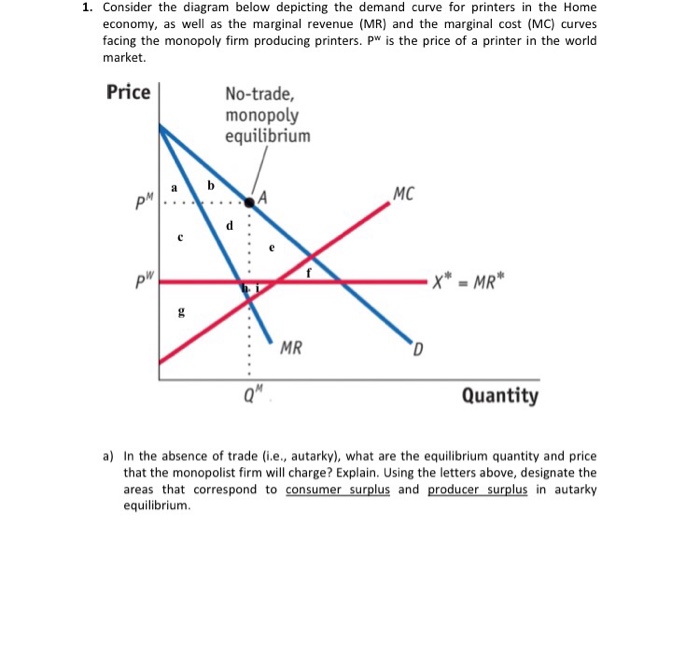
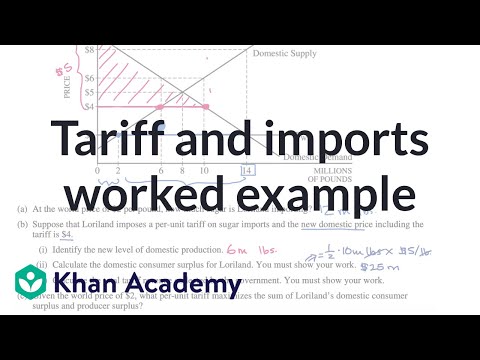
And show that the monopolist's best strategy is dumping on the world market † Use the graph to show that domestic consumers sufier from high monopoly price Hint Consumer surplus is the area below the demand curve Draw it before and after dumpingWe review their content and use your feedback to keep the quality high 1 In the absence of trade, Mexico produces and consumes equilibrium level of quantity, that is, where supply and demand curve of Mexico intersect = 60 units 2 In the absence of trade, Producer's surplus= area under the price line and above the supp View the full answerThis component of loss in consumer surplus is suffered by those who are still purchasing the product The second component of the loss of consumer surplus is equal to the area of triangle LKE which is due to allocative inefficiency caused by the monopolist by reducing output of the product and raising its price
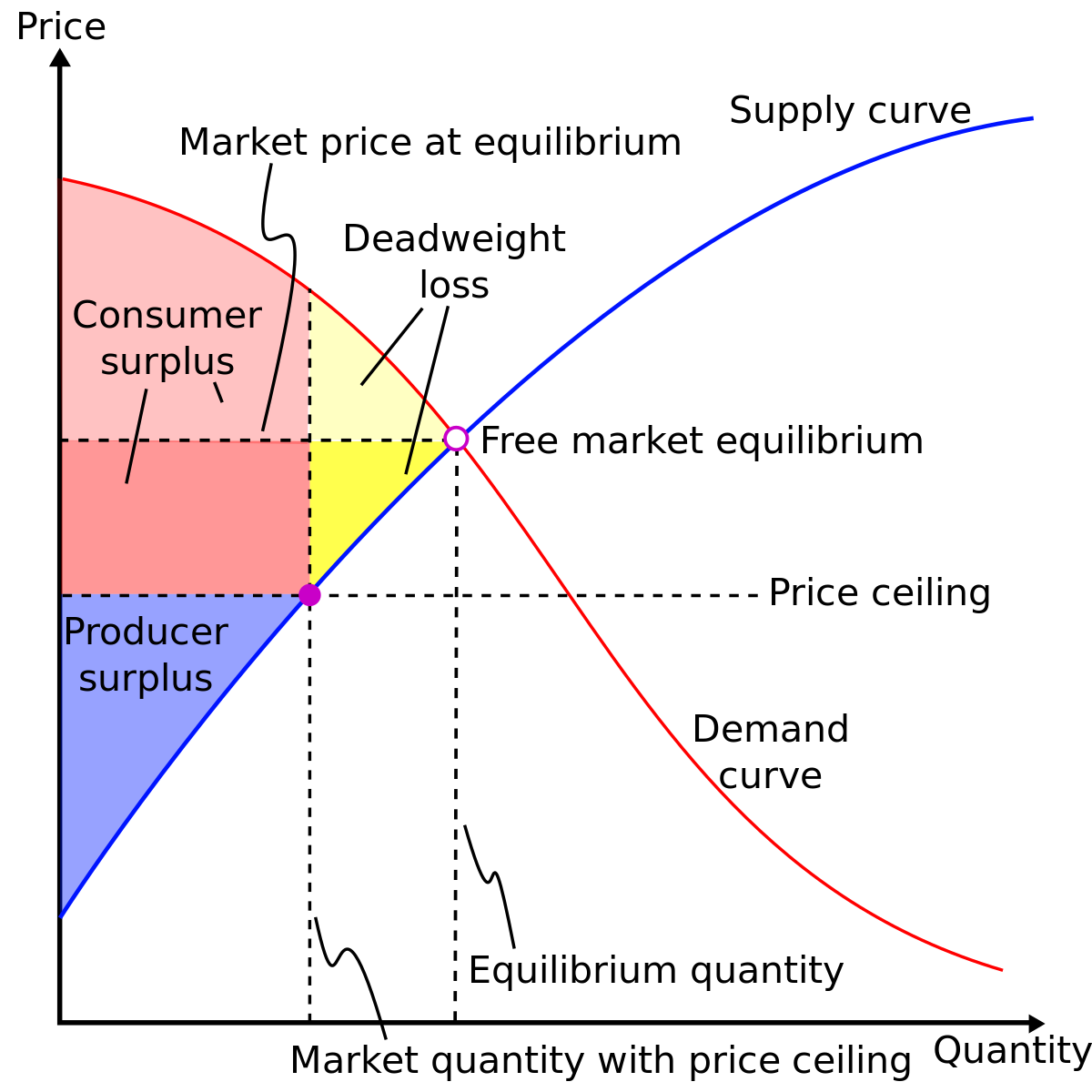
Deadweight Loss Wikipedia

Deadweight Loss Wikipedia
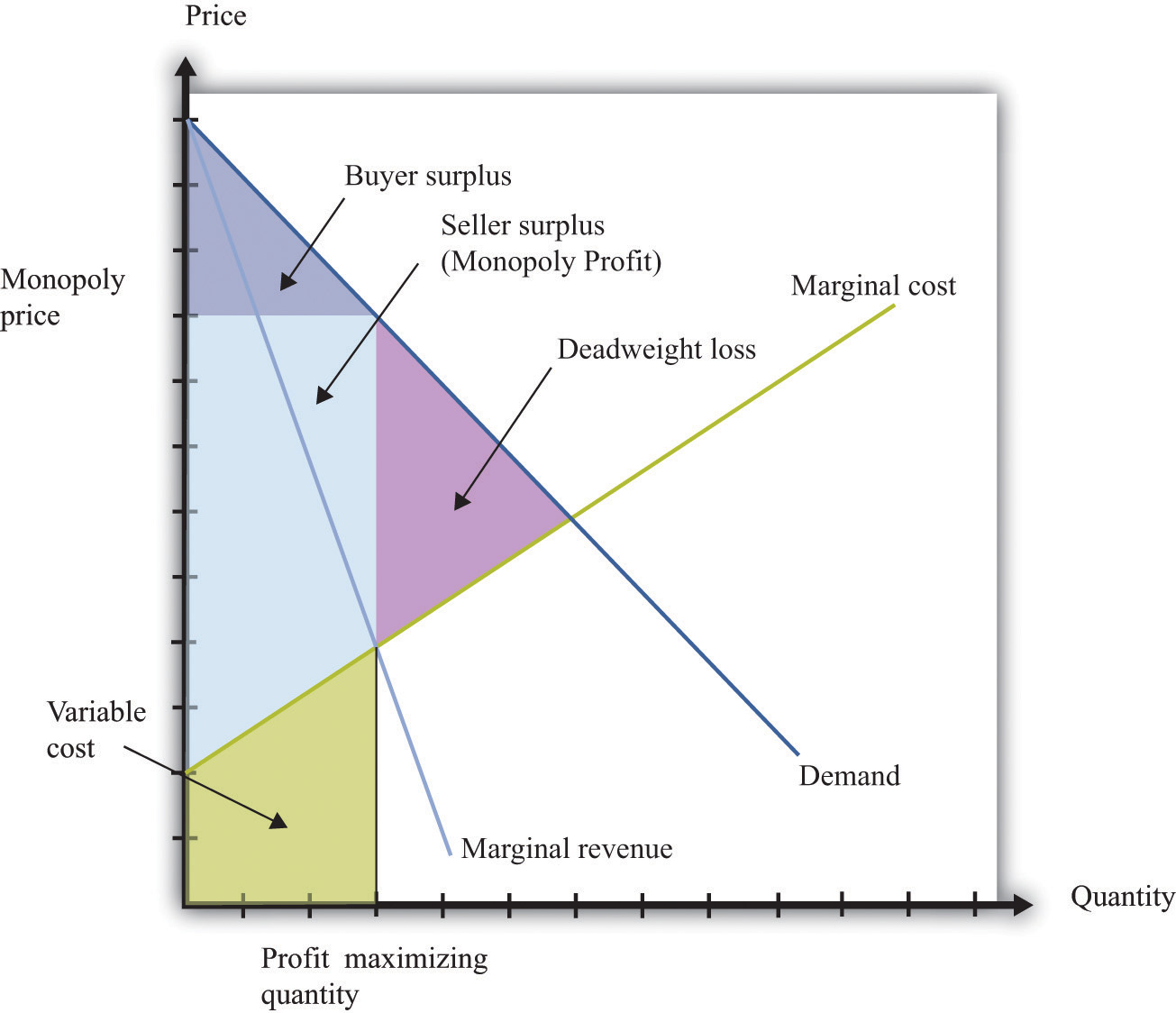
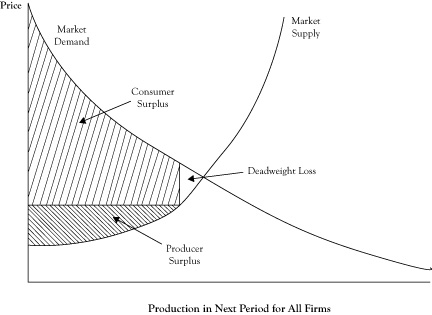
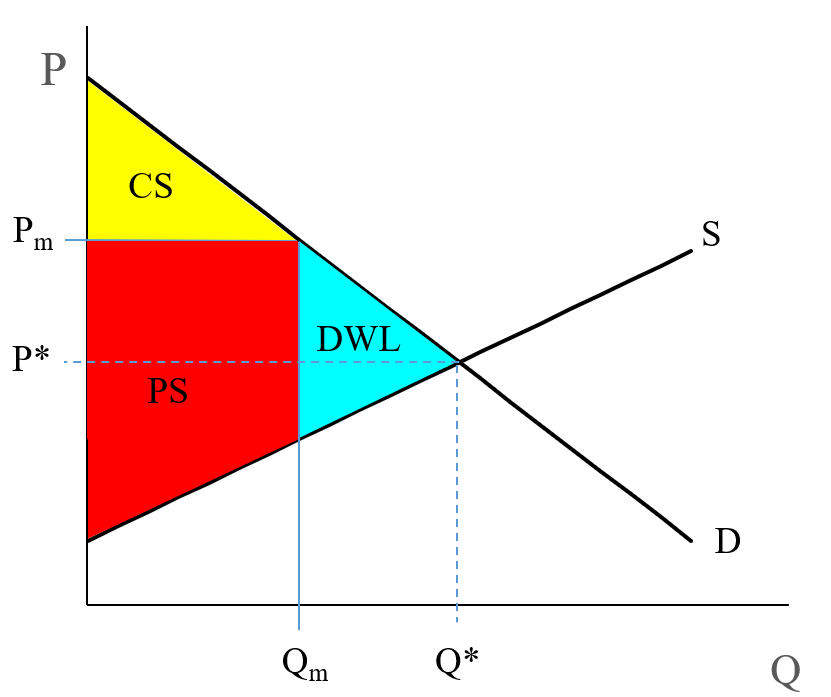
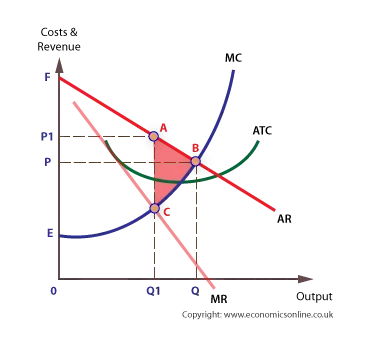
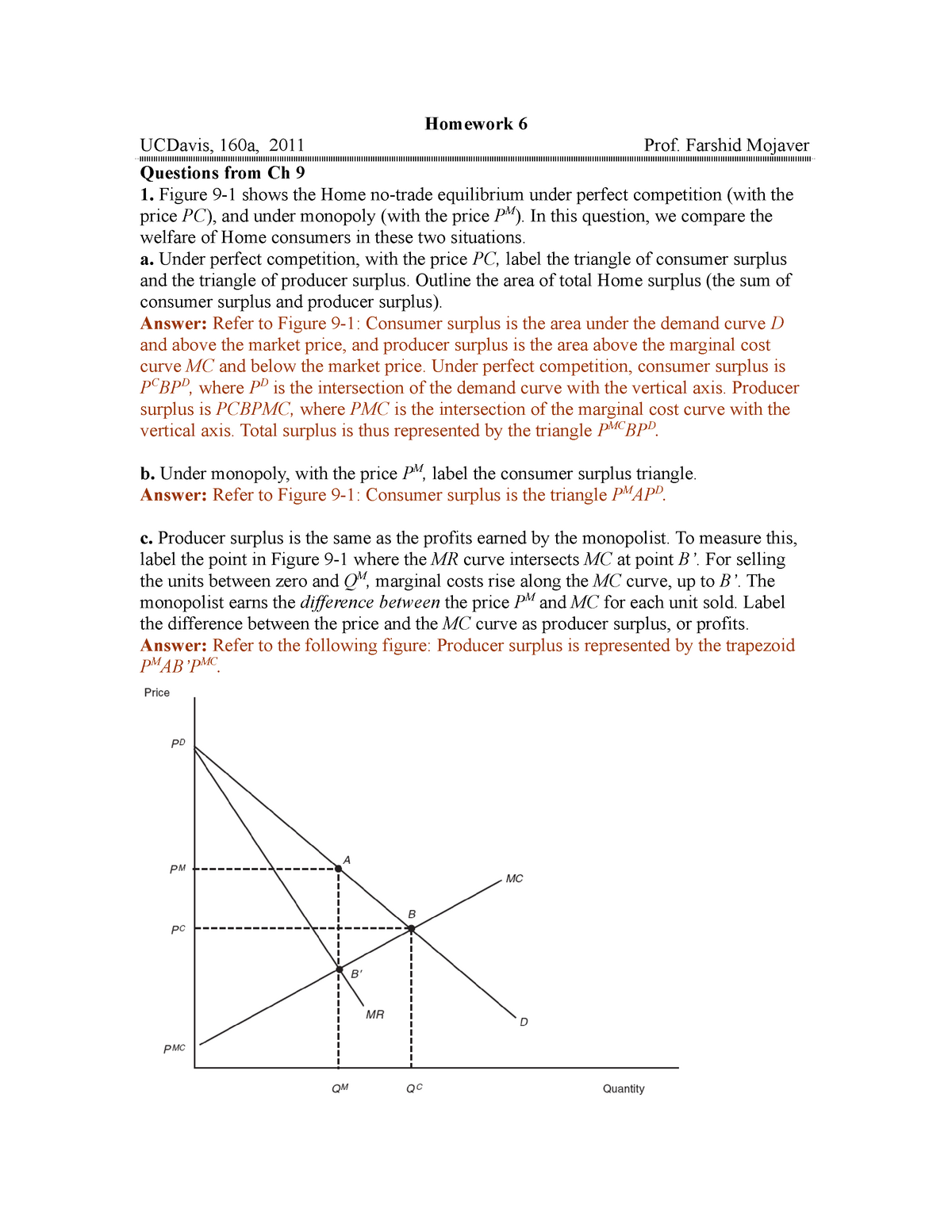
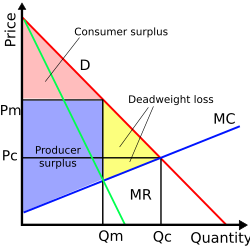
A triangle ABD in the diagram above shows the region of consumer surplus under perfect competition The area of the trapezoid, FEDB , reduces this surplus value under monopoly To the monopoly firm goes the portion indicated by FECB , whereas EDC represents the deadweight loss caused by the monopolist's inefficiently high priceTotal surplus in the market is the summation of consumer surplus and producer surplus and it is maximized at the market equilibrium in the absence of market power and externalities If a good is not being produced by sellers with the lowest cost, then the market reflects inefficiency in the allocation of resourcesA profitable Monopoly A Monopoly suffering losses Economic effects of the Monopoly 1 Please note the reduction in consumer surplus, output, and addition of Deadweight loss and producer surplus or income transfer 2 Price is NOT = MINIMUM ATC thus the monopolist is not producing a productive efficient output

Unit 8 Supply And Demand Price Taking And Competitive Markets The Economy
1
With monopoly, consumer surplus would be the area below the demand curve and above P m R Part of the reduction in consumer surplus is the area under the demand curve between Q c and Q m;Consumer surplus in this market is represented by the area Figure 98 $/Q MC a f b MR Q/t a dacb O b ecf c dafc O d eda e abf Question The figure given below depicts a monopoly market in the absence of price discrimination Consumer surplus in this market is represented by the area Figure 98 $/Q MC a f b MR Q/t a dacb O bIf there was no membership fee the area below the demand curve and above the price would be consumer surplus, however, by charging a membership fee equal to the area of consumer surplus (recall the area of a triangle is 5*base*height or 5*25*60 = $750), the golf club is able to convert the consumer surplus into additional revenue for the firm
Consumer And Producer Surplus
How To Calculate Consumer Surplus And Producer Surplus With A Price Ceiling Youtube
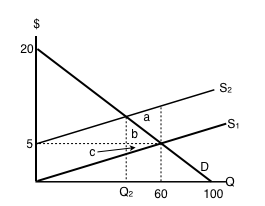
This is because it has a dual effect on the consumer's surplus On the one hand, it reduces the consumers' surplus with a higher price on the first 1,000 units (4) On the other, it increases consumers' surplus by producing more than is done by pure monopoly (5) The net effect on consumers' surplus (5 – 4) is not necessarily negativeAnd ii in the absence of government regulation the market loss monopoly curve is the one labeled S1 Price changes simply shift surplus around between consumers, producers, and the government That area represents producer profits, or how much the producer earns above its cost of production In conventional economics, the combined producer and consumer surplus is called "total welfare," not "consumer welfare" Scholars both right and left of Bork believe that he meant to promote a total welfare standard

Regulated Prices Rent Seeking And Consumer Surplus Journal Of Political Economy Vol 1 No 1
Sample Free Response Question Frq On Tariffs And Trade Video Khan Academy
A monopoly is characterized by the absence of competition, which can lead to high costs for consumers, inferior products and services, and corrupt behavior A company that dominates a business sector or industry can use that dominance to its advantage, and at the expense of othersConsider a monopoly firm that is trying to maximize profit in the presence of aggregate demand uncertainty In each demand state, there is a distribution of consumer valuations, or a demand curve, where each consumer is negligible relative to the market and desires at most one unit of the good It is well known that in the absence ofItem Links with Area Consumers' expenditure on the good OAEQ* Producer surplus OP*EQ* Social surplus BP*E Consumer surplus ABE Producers' sales revenue AP*E A response to this self exercise is on page 46 46 The Decisions of a Singleprice Monopoly Among the four market types introduced in standard economics textbooks, monopoly and

Lesson Overview Consumer And Producer Surplus Article Khan Academy

Econ Final Flashcards Quizlet
Consumer surplus = Maximum price willing to spend – Actual price In our earlier example with the television, we can see that consumer surplus equals $1,300 minus $950 to give us a total of $350 for our surplus On a larger scale, we can use an extended consumer surplus formula Consumer surplus = (½) x Qd x ΔPThe area A B C shows changes in consumers' and producers' surplus when moving from competitive price and quantity, P C, and Q C, respectively, to a monopolists price and quantity, P m and Q m, respectively Under monopoly the price is higher, and consumers buy less and those consumers who buy the good lose surplus of an amount given byIt is contained in the deadweight loss area GRC But consumers also lose the area of the rectangle bounded by the competitive and monopoly prices and by the

1 A Comparison Of Monopoly And Competition Download Scientific Diagram
/producer_surplus_final-680b3c00a8bb49edad28af9e5a5994ef.png "Producer Surplus Definition")
Producer Surplus Definition
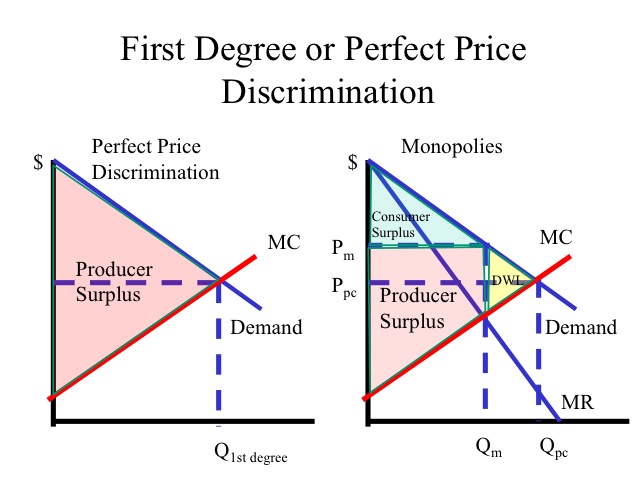
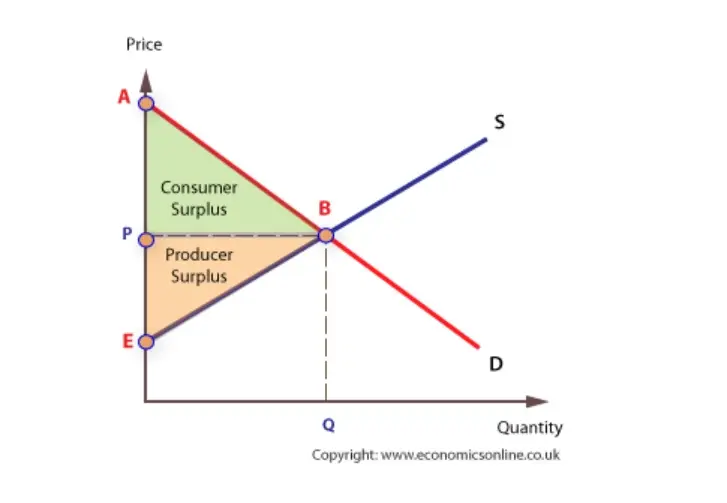
A simple example of producer surplus would be when you sell an item for which you intend to charge USD 0, but the consumer has paid USD 250 In this case, you have a producer surplus of USD 50 Consider another example Let's say, the producer supplies a toy car at USD 10, and sells cars to obtain USD 0 Consumer surplus is defined by the area below the demand curve, above the price, and left of the quantity bought Furthermore, how do you maximize total surplus in a monopoly? Under monopoly, consumer sur plus is A, producer surplus is B D, and the inefficiency or deadweight loss of monopoly is C – E 292 CHAPTER 9 Monopoly Qm = 6 units it sells The monopoly loses area E, however, because it sells less than the competitive output

Worst Case Deadweight Loss Theory And Implications Vox Cepr Policy Portal
Solved Question 4 Public Policy A Draw A Correctly Chegg Com
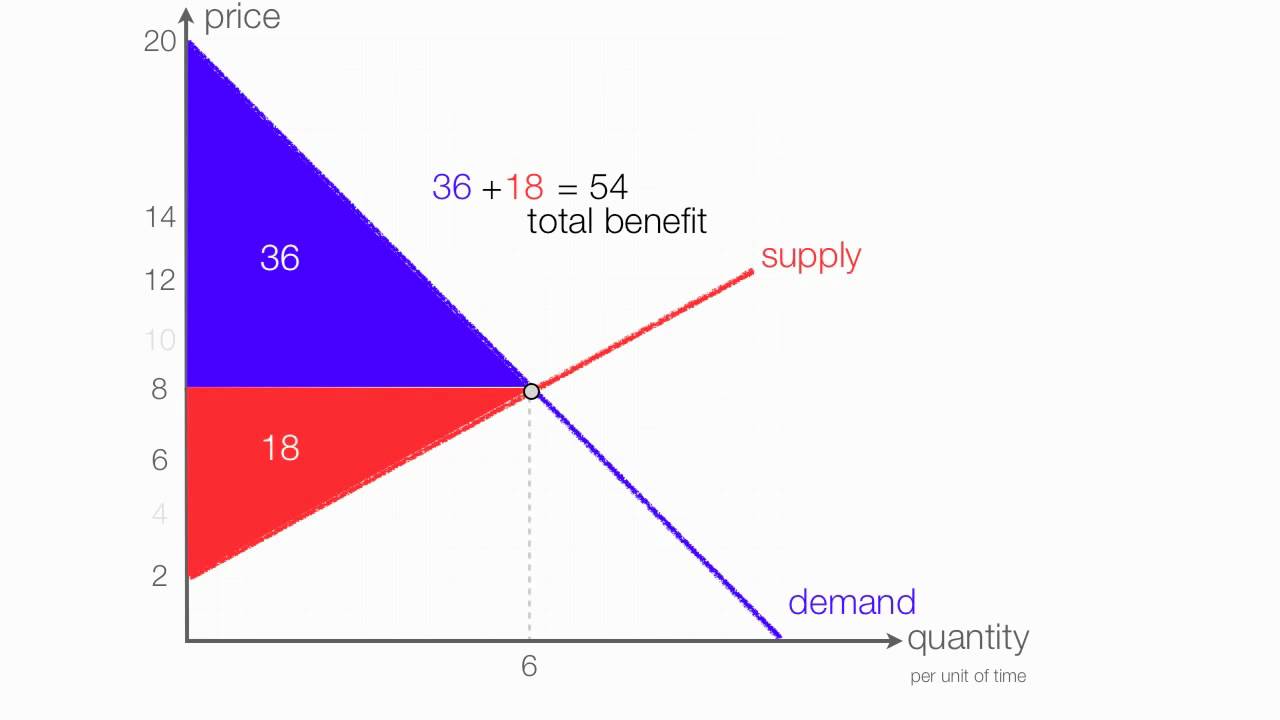
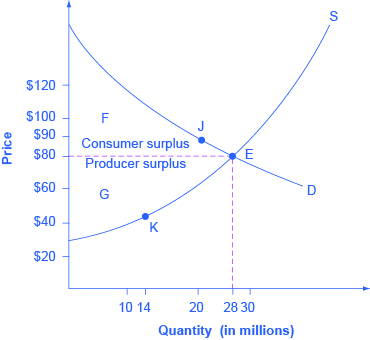
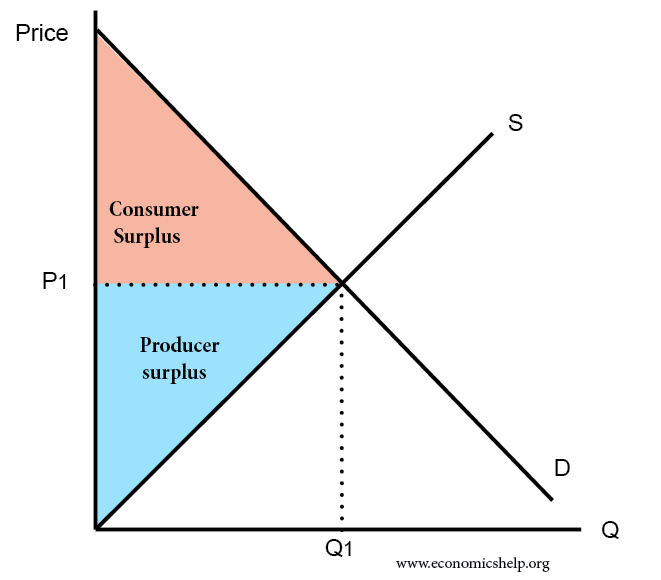
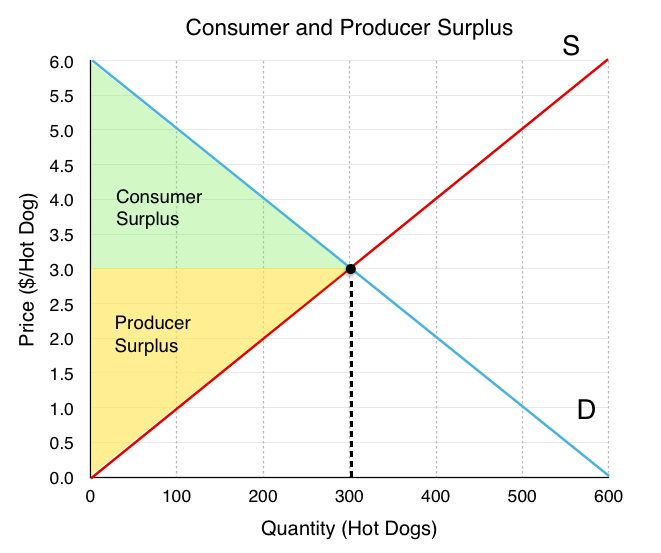
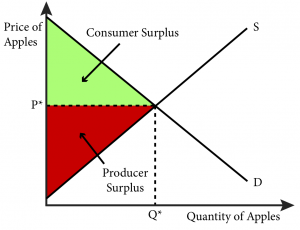
Consumer surplus is the difference between the consumer's willingness to pay and the price that he or she actually pays In Figure 1, this is the area under the demand curve above (ie, the triangular area ) Producer surplus is the difference between a producer's reservation price and the price actually received In Figure 1, producer surplus is the areaThe social planner could maximize total surplus by charging the price corre sponding to the point of intersection between demand and marginal cost curves Use the black point (plus symbol) to indicate the equilibrium price of a ton of lemons and the equilibrium quantity of lemons in Bolivia in the absence of international trade Then, use the green point (triangle symbol) to shade the area representing consumer surplus in equilibrium
Economic Efficiency Article Khan Academy
Econ 150 Microeconomics
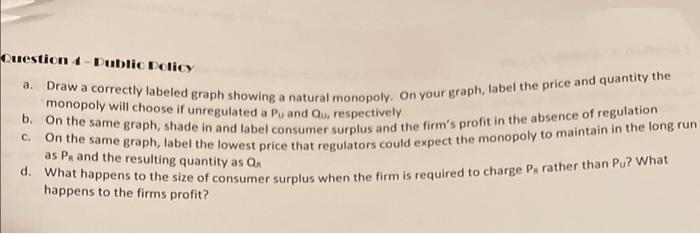
How to illustrate the area of consumer surplus under a monopoly and how it compares to consumer surplus under a perfectly competitive marketIn that case, consumer surplus is area CS When price drops to p 1, quantity sold increases On the one hand, there is an increase on the consumer surplus of initial consumers, being this equal to area CS' On the other hand, new consumers are willing to buy, being their consumer surplus nCS Producer surplusAnd when an innovation eliminates an incumbent's monopoly, the former monopolist's profit ends up back in the pockets of consumers Price discrimination is one of the primary criticisms of the presumed behavior of ISPs in the absence of net neutrality That places a cap on consumer surplus (the area above the price and below the
Definition Of Consumer Surplus Economics Help

Ecn 150 Final With Graphs Flashcards Quizlet
The key difference with the case of a sales tax (see effect of sales tax on economic surplus) is that the area B C is captured as part of consumer surplus rather than government surplusNote, however, that imperfect sorting or transaction costs of nonprice competition could eat away this extra consumer surplus Under first degree discriminating monopoly, a monopolist is able to charge the price the consumer is willing to pay Generally, the area BPE denotes producer's surplus This is because the producer charges the same price 'P' from all the customers Under Monopoly, the monopolist charges the price shown by the segment FE from his customersWelfare loss of monopoly comprises consumer surplus (area A) An explicit acknowledgment that constant returns to scale imply constant longrun average and marginal costs should precede the explanation of the welfare result The welfareloss calculation is made more straightforward with this simpler horizontal supply curve
Solved 1 Consider The Diagram Below Depicting The Demand Chegg Com
Econ 150 Microeconomics
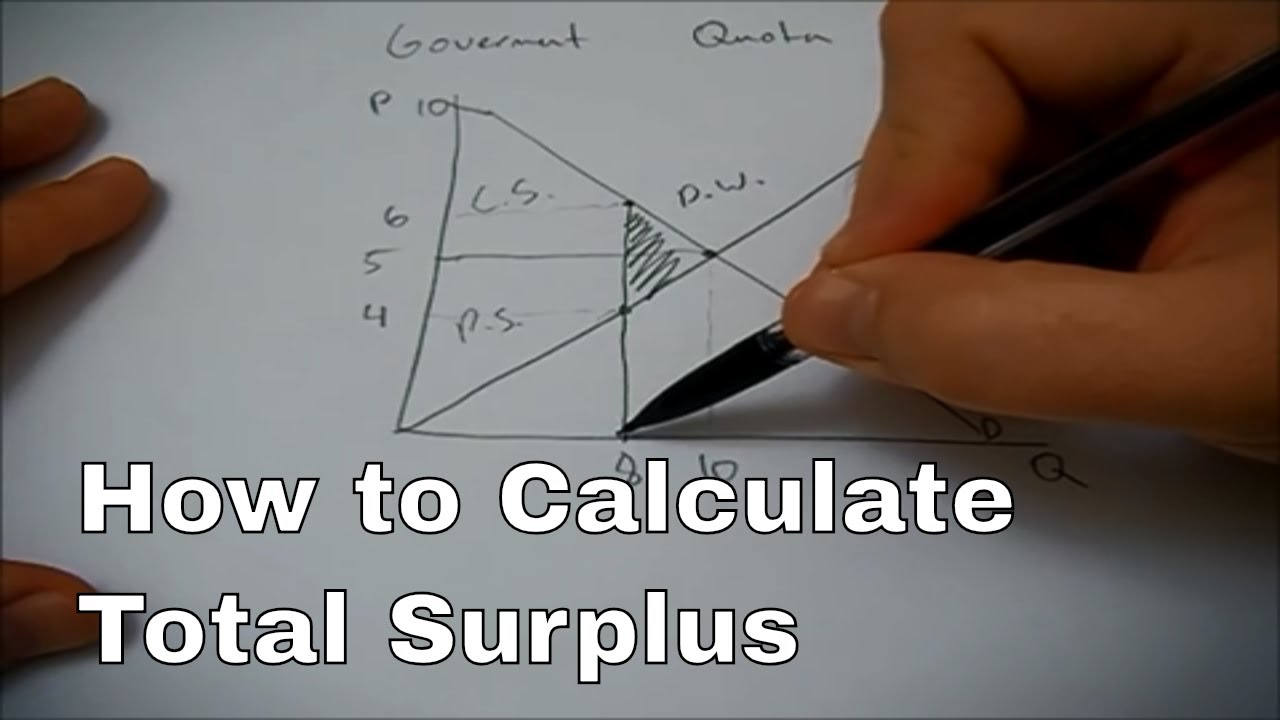
Zero and s can be induced by an appropriately chosen demand curve In contrast, when is between s and s, the equilibrium consumer surplus cannot be arbitrarily small We characterize the curve connecting (s;s s) and (s;0) which identi es theminimum level of consumer surplus for each industry pro t on this domainAgain we are calculating the area of a triangle, where the height is now 60 – 25 = 35 (this is the intercept on the price axis minus the equilibrium price level), and the base is again equilibrium quantity (70) So ½ (35*70) is 1225, which is our consumer surplus Calculating the external cost is a little simply2 Consumer surplus equals the area of the under the demand curve and monopoly price (P m), horizontal line Coordinates of three corners of this triangle will be Top left (0, demand curve intercept) = (0, 140) Bottom left (0, P m) = (0, 100) Right corner (Q m, P m) = ( , 100) C S = (140 − 100) ( − 0) / 2 = 400
4 7 Taxes And Subsidies Principles Of Microeconomics
Market Power And Monopoly
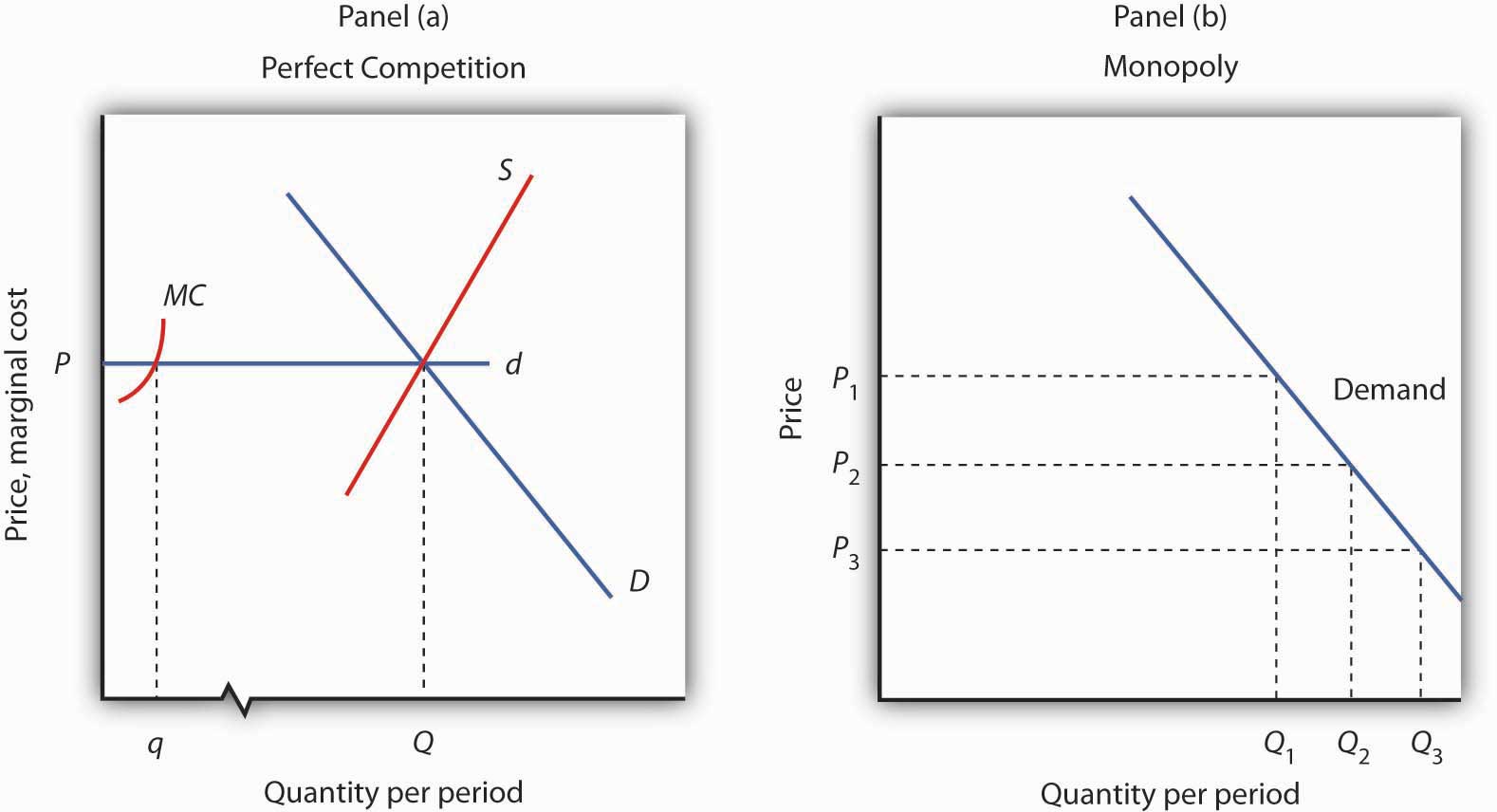
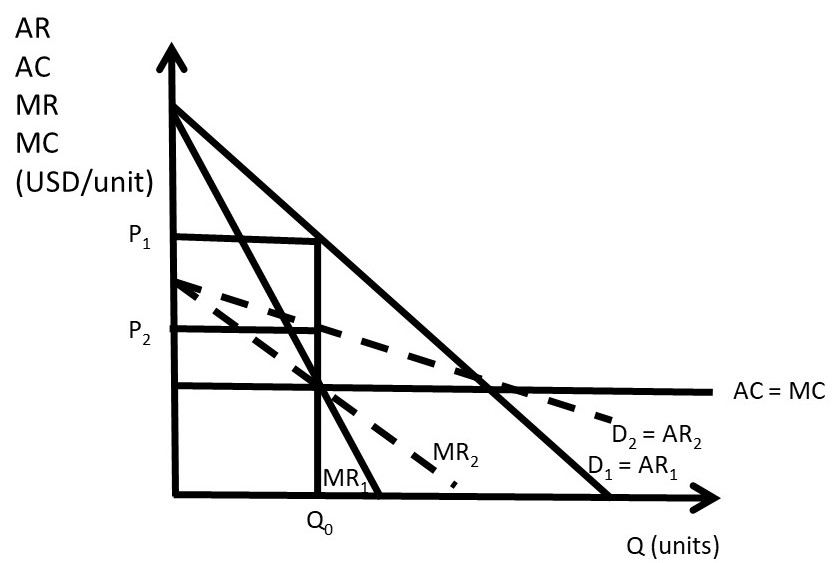
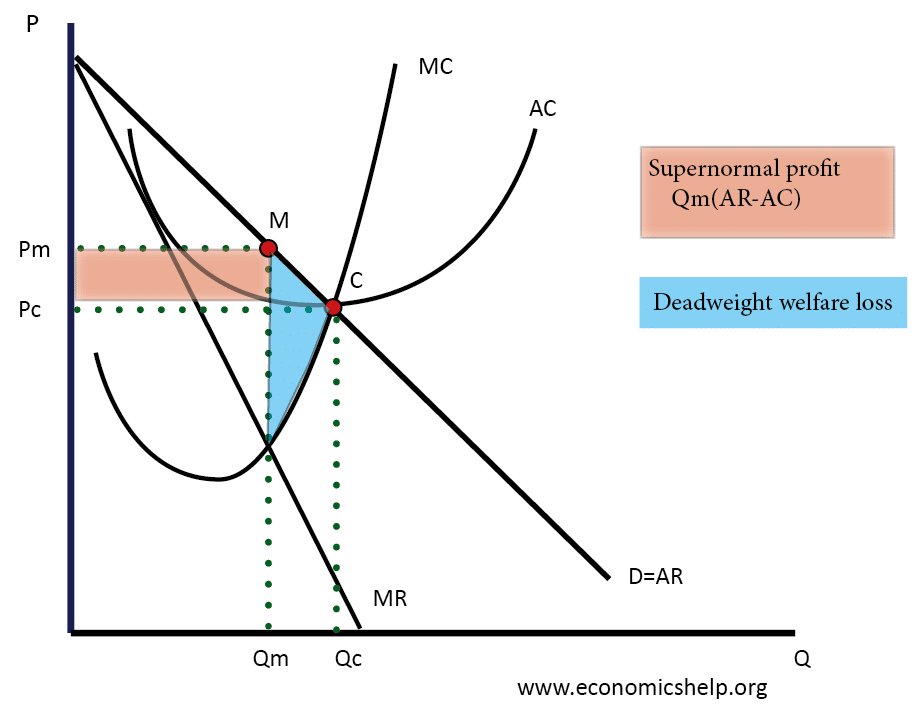
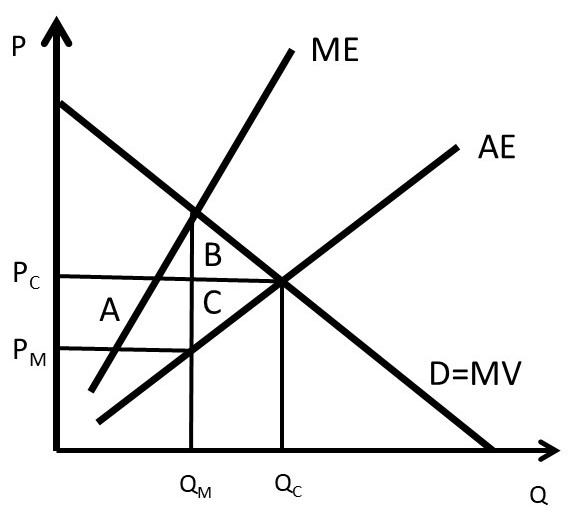
34 Monopoly Characteristics 341 The Absence of a Supply Curve for a Monopolist There is no supply curve for a monopolist This differs from a competitive industry, where there is a onetoone correspondence between price (P) and quantity supplied (Q s) For a monopoly, the price depends on the shape of the demand curve, as shown in Figure Compared to a competitive market, the monopolist increases price and reduces output Red area = Supernormal Profit (ARAC) * QBlue area = Deadweight welfare loss (combined loss of producer and consumer surplus) compared to a competitive market there are kinds of monopoly such as Simple monopoly, Pure monopoly, Legal monopoly etcIt is contained in the deadweight loss area GRC But consumers also lose the area of the rectangle bounded by the competitive and monopoly prices and by the
Monopoly

Worst Case Deadweight Loss Theory And Implications Vox Cepr Policy Portal
consumer surplus and producer surplus Consumer surplus is the difference between the consumer's willingness to pay and the price that he or she actually pays In Figure 1, this is the area under the demand curve above (ie, the triangular area ) Producer surplus is the difference between a producer's reservation
Facebook And The Cost Of Monopoly Stratechery By Ben Thompson
1
Chapter 3 Monopoly And Market Power The Economics Of Food And Agricultural Markets

Graph 1
3 6 Equilibrium And Market Surplus Principles Of Microeconomics
Chapter 2 Welfare Analysis Of Government Policies The Economics Of Food And Agricultural Markets
Module 10 Market Equilibrium Supply And Demand Intermediate Microeconomics
Why Perfect Competition Is Desirable
Econ 150 Microeconomics

Graph 1
Reading Monopolies And Deadweight Loss Microeconomics

State Energy Cartels Cardozo Law Review
4 5 Price Controls Principles Of Microeconomics
4 7 Taxes And Subsidies Principles Of Microeconomics

Graph 1

Facebook And The Cost Of Monopoly Stratechery By Ben Thompson
4 7 Taxes And Subsidies Principles Of Microeconomics
Sample Free Response Question Frq On Tariffs And Trade Video Khan Academy
Econ 150 Microeconomics

Graph 1
Market Power And Monopoly E B F 0 Introduction To Energy And Earth Sciences Economics

Pdf Innovation And The Opportunity Cost Of Monopoly

Consumer Surplus Boundless Economics

Unit 8 Supply And Demand Price Taking And Competitive Markets The Economy
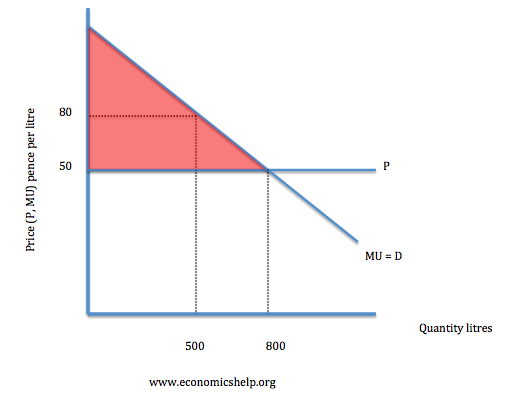
Definition Of Consumer Surplus Economics Help
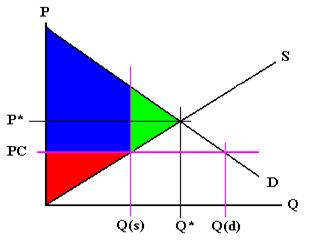
Price Controls And Their Effects E B F 0 Introduction To Energy And Earth Sciences Economics
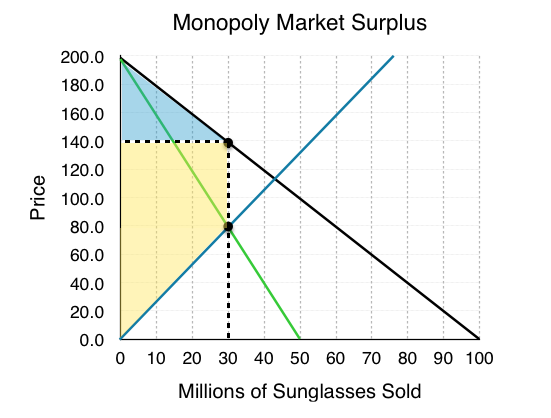
8 1 Monopoly Principles Of Microeconomics

Monopolistic Competition Ppt Download
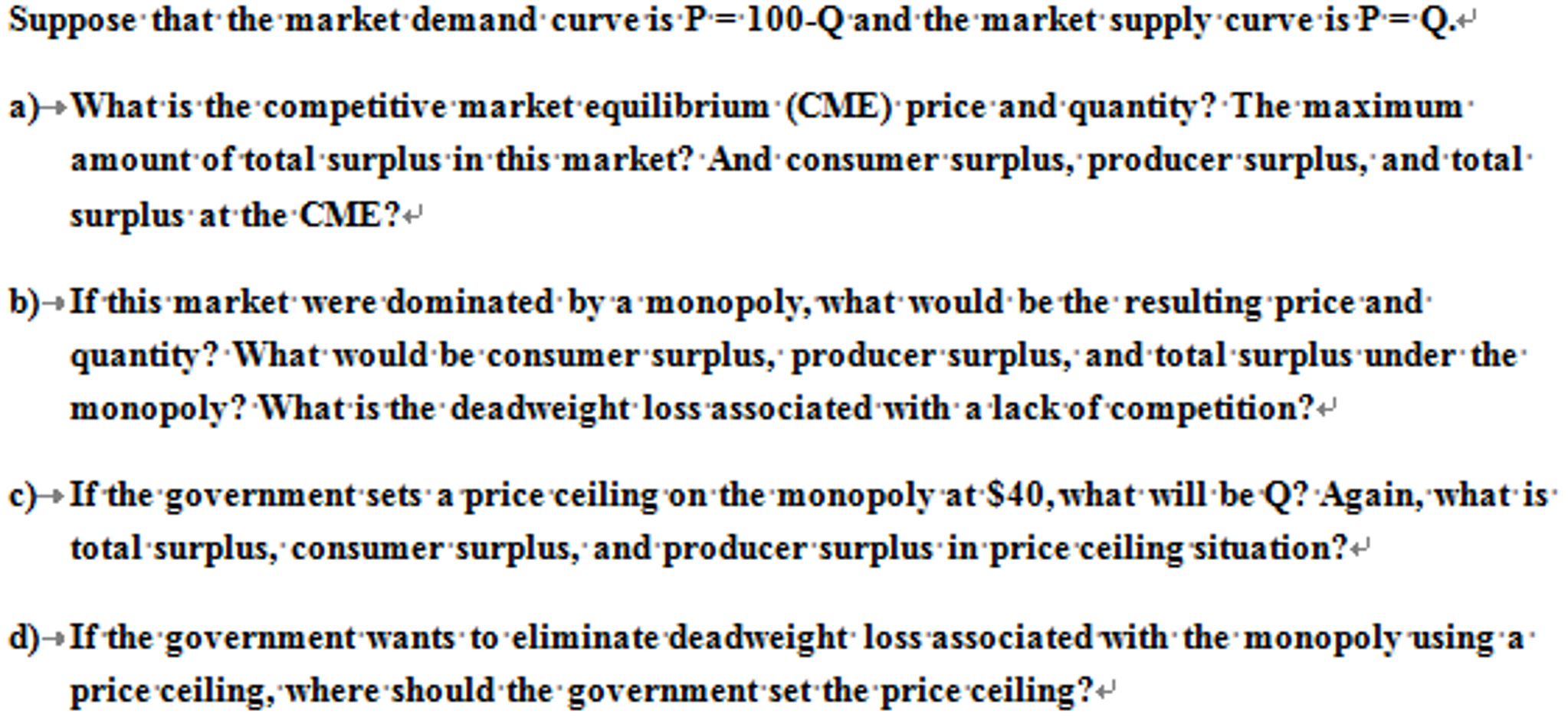
Solved Suppose That The Market Demand Curve Is P 100 Q And Chegg Com
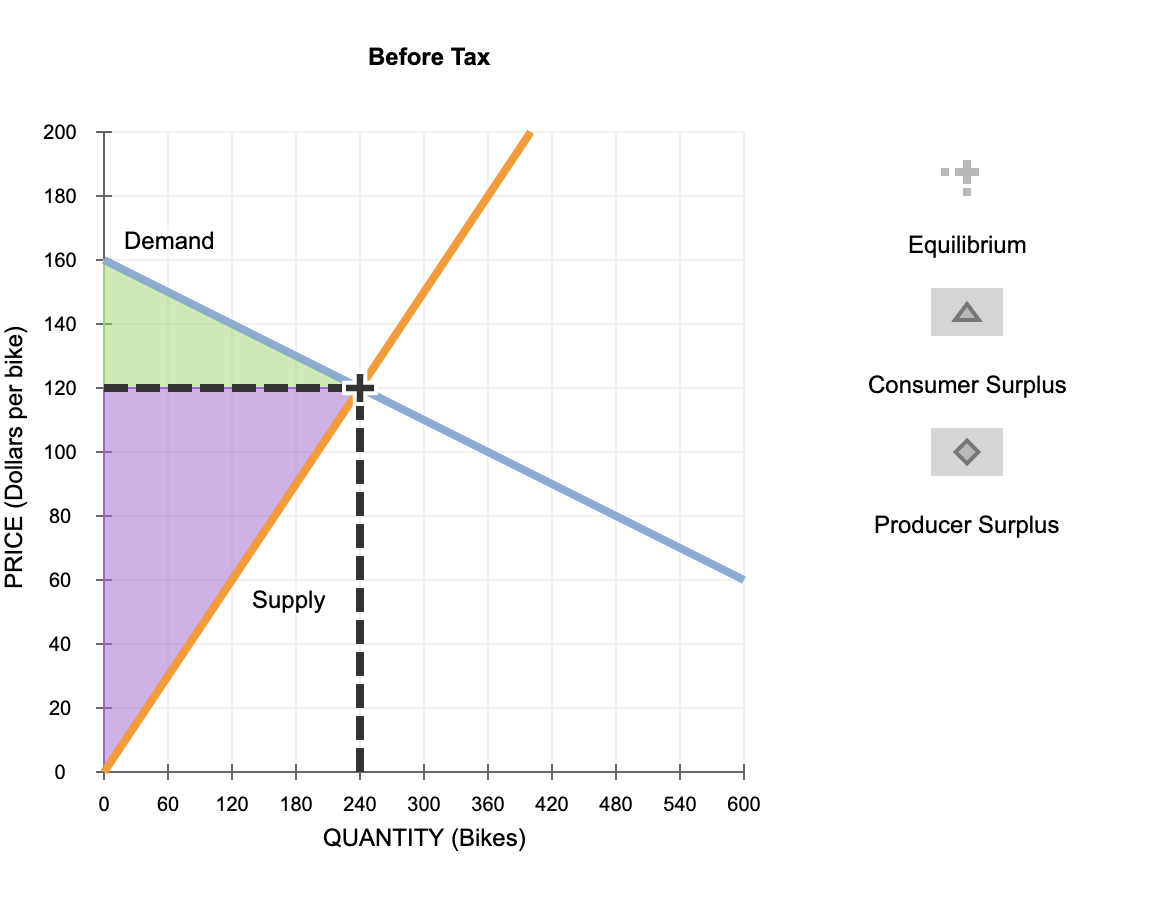
Answered Consider The Market For Mountain Bikes Bartleby

Econ 224 Quizzes Final Review Flashcards Quizlet
Monopoly Regulation
2
2

Social Effects Of A Monopoly Course Hero

Graph 1
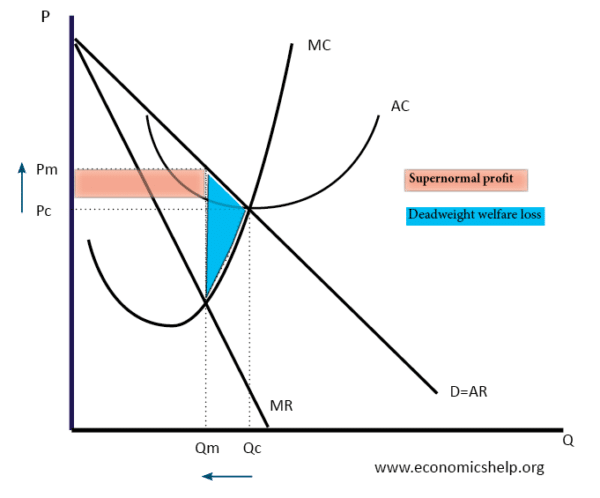
Diagram Of Monopoly Economics Help
Monopoly
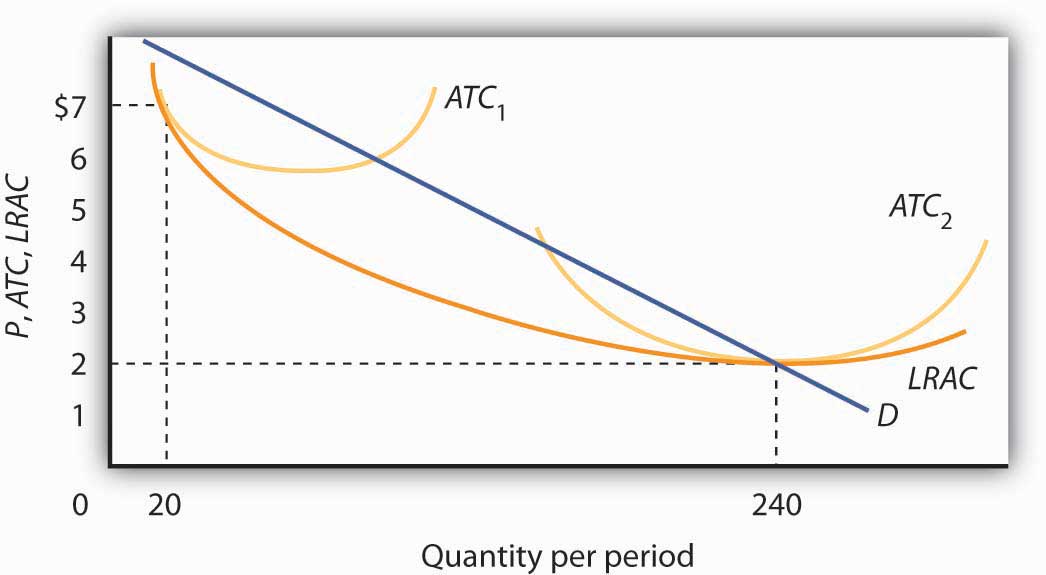
Monopoly

Micro Econ Flashcards Quizlet
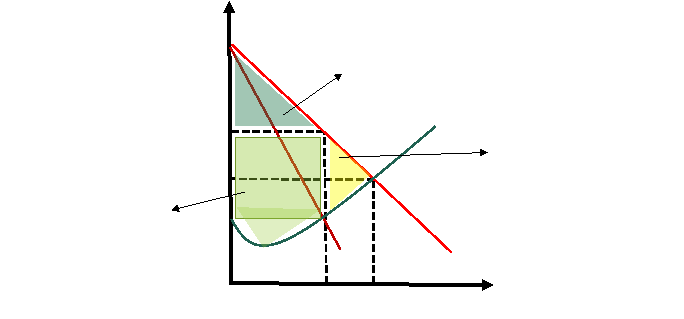
Monopoly Market Analysis Of Water Company
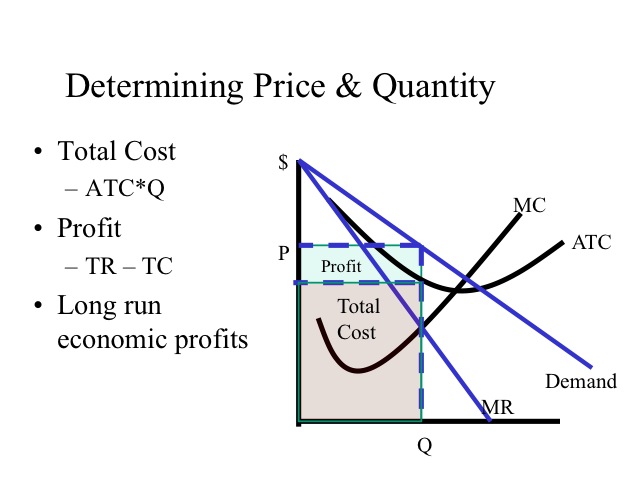
Econ 150 Microeconomics

Consumer Surplus An Overview Sciencedirect Topics
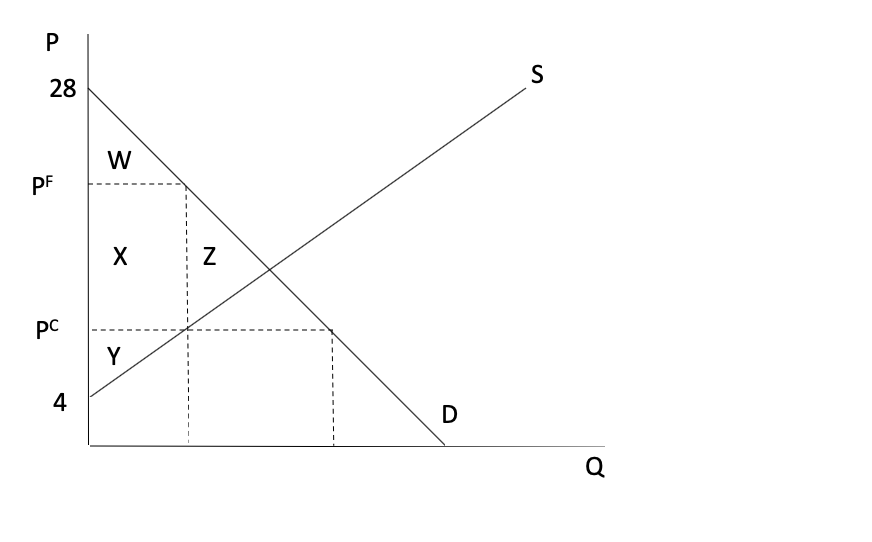
Solved Suppose That The Government Decides To Impose A Price Chegg Com
Why Is A Perfectly Competitive Market More Efficient Than A Monopoly Market Quora

Regulated Prices Rent Seeking And Consumer Surplus Journal Of Political Economy Vol 1 No 1
3
Consumer And Producer Surplus

Unit 7 The Firm And Its Customers The Economy
Chapter 3 Monopoly And Market Power The Economics Of Food And Agricultural Markets
9 2 How A Profit Maximizing Monopoly Chooses Output And Price Principles Of Economics

Ecn 2 Final Exam Flashcards Quizlet
2

Unit 8 Supply And Demand Price Taking And Competitive Markets The Economy
How To Calculate Total Surplus Youtube
Total Surplus
1

Consumer Surplus An Overview Sciencedirect Topics
Monopoly Wikiwand
2
Module 10 Market Equilibrium Supply And Demand Intermediate Microeconomics
Monopoly Economics Help
Answered Consider The Market For Mountain Bikes Bartleby
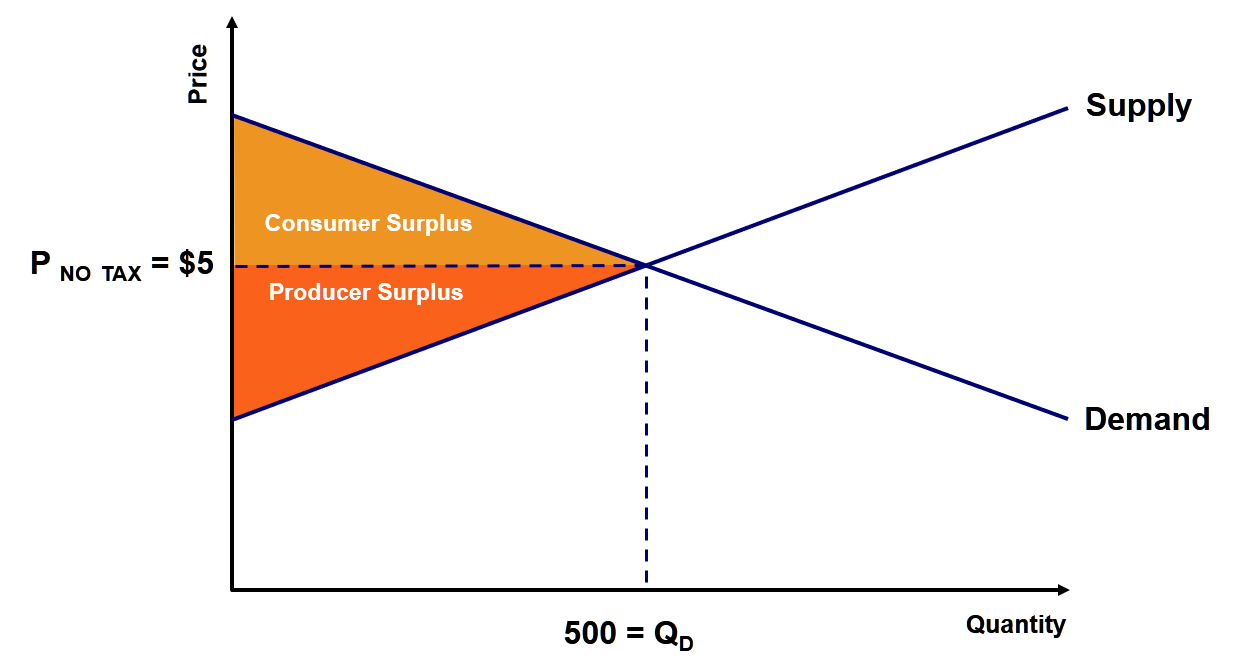
Deadweight Loss Examples How To Calculate Deadweight Loss
2

6 2 Maximizing In The Marketplace Principles Of Economics
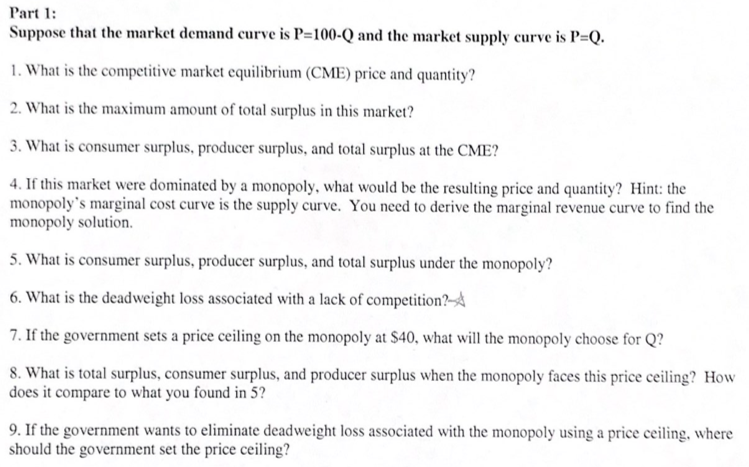
Part 1 Suppose That The Market Demand Curve Is Chegg Com
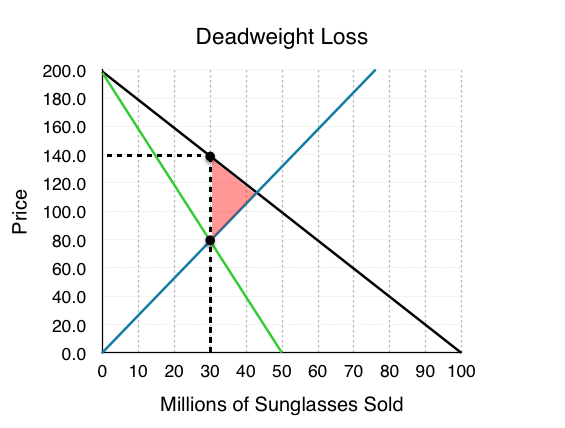
8 1 Monopoly Principles Of Microeconomics
2
Hw7s F11 Homework Tutorial 6 Homework 6 Ucdavis 160a 11 Prof Farshid Mojaver Questions From Studeersnel
Monopoly Wikipedia

Example Breaking Down Tax Incidence Video Khan Academy
Chapter 2 Welfare Analysis Of Government Policies The Economics Of Food And Agricultural Markets
Chapter 3 Monopoly And Market Power The Economics Of Food And Agricultural Markets

Graph 1
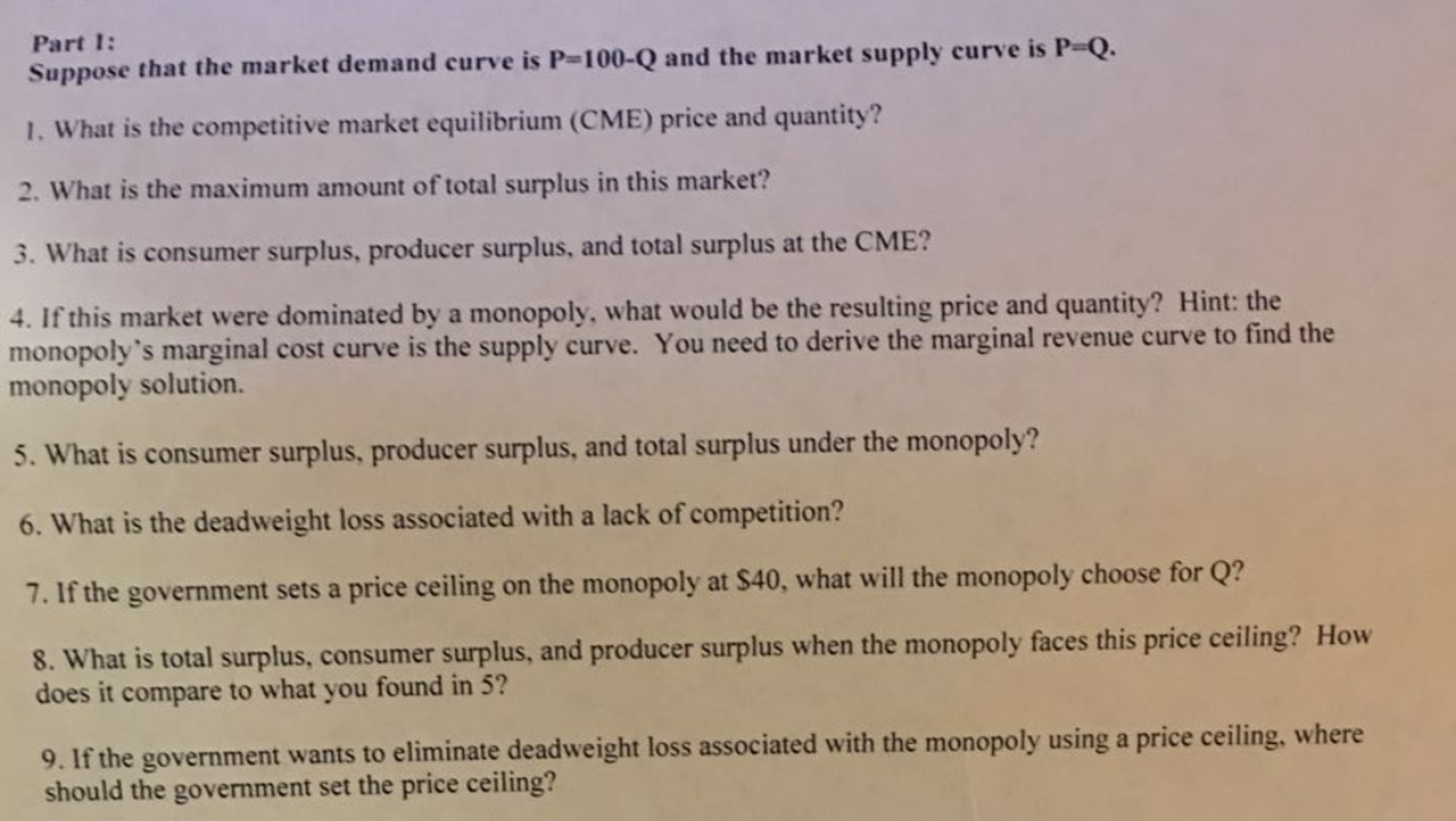
Solved Suppose That The Market Demand Curve Is P 100 Q And Chegg Com


0 件のコメント:
コメントを投稿